


Subtotal €0.00

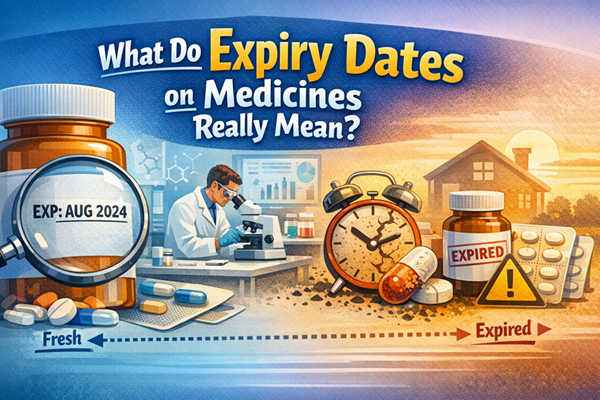
Medicine packaging always includes an expiry date. Many people assume this date marks the moment a medicine suddenly becomes unsafe. In reality, the expiry date represents the period during which the manufacturer guarantees the medicine will maintain its full strength, quality, and stability when stored correctly.
Expiry dates exist because medicines are chemical products. Over time, the active ingredients inside them slowly change. Environmental factors such as temperature, humidity, and light can influence this process. For this reason, manufacturers conduct stability testing to determine how long a medicine will remain effective under normal storage conditions.
Understanding what medicine expiry dates really mean helps people make better decisions about medicine safety, effectiveness, and disposal.
How medicine expiry dates are determined
Before a medicine reaches pharmacies, it undergoes stability testing. Scientists store the medicine under controlled conditions and monitor how its active ingredients behave over time. They examine factors such as chemical stability, packaging performance, and the medicine’s ability to maintain its intended potency.
During these studies, samples are tested at different intervals. The testing period may be extended if the medication continues to meet stringent quality standards. Eventually, a timeframe is identified, during which the medicine reliably retains its labelled strength.
This timeframe becomes the expiry date printed on the packaging.
The date therefore represents the manufacturer’s guarantee of quality. Up until that date, the medicine should deliver the expected therapeutic effect when stored correctly.
The journey of a medicine from production to expiry
To understand expiry dates more clearly, it helps to look at the full lifecycle of a medicine.
Manufacture
Pharmaceutical companies produce medicines under controlled conditions. Ingredients are measured precisely and combined according to strict regulatory standards.
Quality testing
Each batch undergoes laboratory testing to confirm purity, strength, and stability. Only batches that meet regulatory requirements are released.
Distribution
The medicine is transported through regulated supply chains. Temperature control and protective packaging help maintain stability during shipping.
Pharmacy storage
Pharmacies store medicines in carefully monitored environments. Temperature and humidity levels are controlled to protect product quality.
Home storage
Once purchased, responsibility shifts to the patient. Proper storage at home becomes important for maintaining the medicine’s stability.
Expiry date
The expiry date represents the final point of the manufacturer’s guaranteed stability under recommended storage conditions.
This timeline shows that expiry dates are not arbitrary. They reflect the entire journey of the medicine and the testing behind it.
What happens to medicines over time?
Medicines do not suddenly stop working on the expiry date. Instead, their chemical composition gradually changes.
The active ingredient may slowly lose potency. This means the medicine could become less effective at delivering the intended treatment.
Other changes can also occur. Liquid medicines may separate, creams may change texture, and tablets may break down more easily. While these changes may not always be visible, they can affect how the medicine performs.
Certain medicines are more sensitive to degradation than others. Liquid antibiotics, eye drops, and medicines requiring refrigeration often have shorter stability periods.
Environmental conditions can accelerate this process. Heat, light exposure, and moisture can speed up chemical breakdown. This phenomenon is one reason pharmacists emphasise proper storage.
Why is using expired medicine not recommended?
Although an expired medicine may not immediately cause harm, there are good reasons to avoid using it.
First, the medicine may no longer provide the intended effect. Reduced potency can mean the treatment fails to manage symptoms or resolve the underlying condition.
Second, certain medicines can become unstable after the expiry date. In rare cases, degraded compounds may produce unwanted effects, such as increased toxicity or reduced efficacy, which can further complicate the patient’s health situation.
Third, expired medicines can lead to confusion about dosage or treatment plans. Keeping outdated medicines alongside current prescriptions increases the chance of accidental misuse.
For these reasons, healthcare professionals advise replacing medicines once the expiry date has passed.
Signs that a medicine may have degraded
Certain medicines may exhibit signs of degradation even before the expiry date.
Common warning signs include:
- Tablets that have changed colour or developed unusual spots
- Capsules that appear cracked or sticky
- Liquids that have separated or become cloudy
- Creams that show texture changes or unusual odours
- Packaging that appears damaged or compromised
- Labels that have faded or become unreadable
- Blister packs that have been punctured or opened
- Medicines exposed to high temperatures or sunlight
- Refrigerated medicines left outside the fridge for extended periods
- Products stored in humid environments such as bathrooms
- Medicines transferred into unlabelled containers
- Products that no longer match the description on the packaging
If any of these signs are present, it is safest to stop using the medicine and seek advice from a pharmacist.
How to dispose of expired medicines safely
Throwing medicines directly into household rubbish or flushing them down the toilet can create environmental risks. Pharmaceutical compounds can enter water systems or affect wildlife, leading to potential contamination of drinking water and harm to aquatic ecosystems.
The safest approach is to return expired or unused medicines to a pharmacy. Pharmacies have established disposal procedures that ensure medicines are handled responsibly.
When returning medicines, it is helpful to keep them in their original packaging. This allows pharmacy staff to identify the product and manage disposal correctly.
Regularly reviewing medicines stored at home helps prevent expired products from accumulating.
Managing medicine supplies at home
Keeping track of medicines does not require complex systems. A simple routine review can help maintain safety.
People can periodically check their medicine storage areas and look for products approaching their expiry date. Medicines that are no longer needed can be separated and returned to a pharmacy.
This habit also provides an opportunity to confirm that medicines are being stored correctly. A cool, dry environment away from direct sunlight helps protect stability.
Small organisational habits can make medicine management easier and safer.
Expiry dates help protect treatment quality
Medicine expiry dates are part of the safety system that protects patients. They reflect the scientific testing that ensures medicines remain effective throughout their intended shelf life.
By paying attention to expiry dates, storing medicines properly, and disposing of outdated products responsibly, households can maintain safe medicine practices.
Using medicines within their recommended timeframe and storing them correctly increases their likelihood of delivering the intended benefits.

Comments are closed