


Subtotal €0.00

Pain is the body’s way of signalling that something is wrong. Whether it is a headache, muscle strain, or chronic condition, pain can interfere with daily life. Painkillers are designed to reduce or block this discomfort, but they do not all work in the same way.
This guide explains clearly how painkillers work in the body, the different types available, and when each may be appropriate.
What happens when you feel pain?
Pain begins at the site of an injury or irritation. Special nerve endings detect damage and send electrical signals through the spinal cord to the brain. The brain then interprets these signals as pain.
Chemicals such as prostaglandins are released in response to injury or inflammation. These chemicals increase sensitivity in the affected area, making the pain feel stronger.
Painkillers work by interrupting this process at different stages.
The main types of painkillers
Different painkillers target pain in different ways. The most common categories include:
1. Paracetamol
Paracetamol works mainly in the brain. It reduces the perception of pain rather than treating inflammation.
- Best for: headaches, mild pain, fever
- Does not reduce swelling
- Generally well tolerated when used correctly
2. Non-Steroidal Anti-Inflammatory Drugs (NSAIDs)
Examples include ibuprofen and aspirin. These medicines reduce the production of prostaglandins, which lowers both pain and inflammation.
- Best for: muscle pain, joint pain, inflammation
- Helps reduce swelling and stiffness
- Should be taken with care in people with stomach or kidney issues
3. Opioids (Stronger Painkillers)
Opioids such as codeine or tramadol work by binding to opioid receptors in the brain and spinal cord. This blocks pain signals and changes how the brain perceives pain.
- Best for: moderate to severe pain
- Often used after surgery or injury
- Can cause drowsiness and carry a risk of dependence if misused
4. Topical Pain Relief
These include gels, creams, or patches applied directly to the skin. They work locally rather than throughout the whole body.
- Best for: muscle aches, joint pain
- Fewer systemic side effects
- Targets specific areas
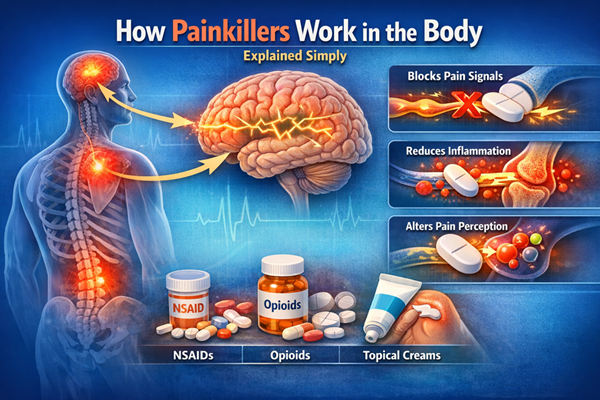
How painkillers interrupt pain signals
Painkillers work in three main ways:
- Reducing inflammation
NSAIDs lower the production of chemicals that cause swelling and irritation. - Blocking pain signals
Opioids prevent pain messages from reaching the brain. - Altering pain perception
Some medicines change how the brain interprets pain, making it feel less intense.
Each type of medication targets a different part of the pain pathway.
Choosing the right pain relief
The right option depends on the type and severity of pain:
- Mild pain: paracetamol is often sufficient
- Inflammatory pain: NSAIDs may be more effective
- Severe pain: stronger options may be required under guidance
It is important to use the lowest effective dose for the shortest time necessary.
For a range of suitable options, you can explore available pain relief medication based on your specific needs.
Safety considerations
Painkillers are effective when used correctly, but misuse can lead to problems.
- Do not exceed recommended doses
- Avoid mixing medications without proper advice
- Be aware of possible side effects
- Seek medical guidance for long-term pain
Stronger painkillers, especially opioids, should be used with caution due to the risk of dependence.
When to seek medical advice
Pain that persists, worsens, or has no clear cause should be assessed by a healthcare professional. This is especially important if:
- Pain lasts longer than a few weeks
- It interferes with daily activities
- Over-the-counter medication does not help
Final thoughts
Painkillers work by targeting different parts of the body’s pain system, from reducing inflammation to blocking signals in the brain. Understanding how they function makes it easier to choose the most appropriate treatment.
Using the correct type of pain relief, in the right way, can make a significant difference to comfort and recovery.

Comments are closed