


Subtotal €0.00

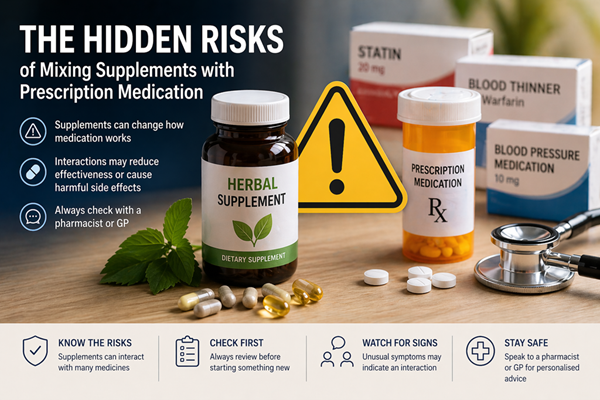
Most people do not consider vitamins, herbal remedies, and over-the-counter supplements as “active” substances. That assumption is where problems often begin. When combined with prescription medication, supplements can alter how medicines work in the body, sometimes reducing effectiveness and other times increasing side effects to dangerous levels.
The issue is not rare. It occurs quietly, often without obvious warning signs, until a condition worsens or a new symptom appears.
Why supplement interactions are often missed
Supplements are widely viewed as safe because they are sold without a prescription. This creates a false sense of security. Unlike prescription medicines, they are not always discussed in detail during medical appointments.
The reality is that many supplements contain biologically active compounds. These compounds can affect liver enzymes, blood clotting, hormone levels, and absorption rates of medication. Even standard vitamins can become problematic when combined with certain treatments.
How interactions happen in the body
Supplement and medicine interactions typically occur in three ways:
1. Absorption interference
Some supplements bind to medications in the gut, reducing how much of the medicine enters the bloodstream. Calcium, magnesium, and iron are common examples.
2. Enzyme disruption in the liver
Certain herbs change how quickly the liver breaks down medication. This can lead to either reduced effect or toxic buildup.
3. Additive biological effects
Some supplements amplify the effect of medicines. This can increase bleeding risk, lower blood pressure too far, or overstimulate the nervous system.
High-risk combinations that are often overlooked
Some interactions appear repeatedly in clinical settings.
Blood thinners and herbal supplements
Warfarin combined with garlic, ginkgo, or fish oil supplements can increase bleeding risk. Even small changes in dosage or supplement intake can affect clotting levels.
St John’s Wort and antidepressants or contraceptives
St John’s Wort can reduce the effectiveness of several medicines by speeding up liver metabolism. This includes certain antidepressants and hormonal contraceptives, increasing risk of treatment failure.
Statins and grapefruit products or certain supplements
Some cholesterol medicines, such as statins, may become too strong when combined with enzyme-altering substances, raising the risk of muscle damage.
Blood pressure medication and liquorice-based supplements
Liquorice root can raise blood pressure and reduce the effectiveness of antihypertensive drugs, creating unstable readings.
Antibiotics and mineral supplements
Tetracycline and quinolone antibiotics may bind with iron or calcium supplements, reducing infection treatment effectiveness if taken too closely together.
Subtle warning signs that should not be ignored
Supplement-drug interactions do not always cause immediate or obvious reactions. Symptoms can develop gradually:
- Unusual bruising or bleeding
- Persistent fatigue or dizziness
- Unexpected changes in blood pressure or heart rate
- Digestive changes such as nausea or discomfort
- Reduced effectiveness of prescribed treatment
These signs are often mistaken for illness progression rather than a medication issue.
Why “natural” does not mean risk-free
A common misunderstanding is that natural products are automatically safe. In pharmacology, “natural” only describes origin, not safety profile.
Many herbal supplements have potent biochemical activity. Some are strong enough to alter hormone balance, affect neurotransmitters, or change cardiovascular function. When combined with prescription medicines, the body may respond unpredictably.
Safer habits for daily use
Reducing risk does not require avoiding supplements entirely, but it does require structure and awareness.
Keep an updated list of everything taken, including vitamins, herbal products, and occasional supplements. Share this list with a pharmacist or GP during every review.
Avoid starting new supplements without checking compatibility first. Even products taken for years can become problematic when a new prescription is introduced.
Timing separation may help in some cases, but it does not resolve interactions that occur through liver metabolism or hormonal pathways. Assumptions about “safe spacing” should not replace professional advice.
When to seek advice quickly
Medical advice should be sought if:
- A new prescription coincides with a new supplement routine
- Symptoms appear after starting or stopping a supplement
- There is any unexplained change in how medication seems to work
Pharmacists are often the most accessible professionals for interaction checks and can review combinations in detail.
Final point
The risk is not limited to rare or exotic products. It often involves common vitamins, herbal teas, and widely available supplements used alongside long-term prescriptions. Awareness and clear communication are the most effective safeguards against avoidable complications.

Comments are closed