


Subtotal €0.00

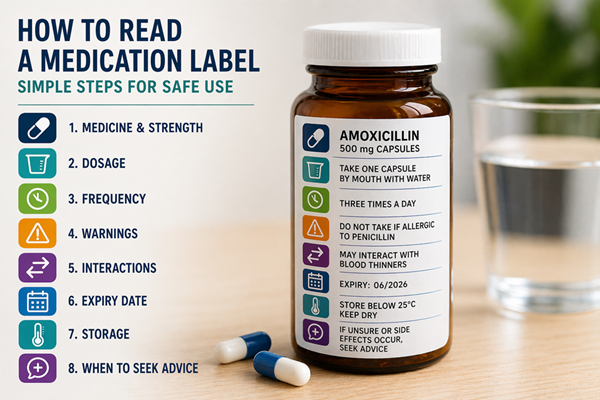
Medication labels contain essential safety information, yet they are often read quickly or misunderstood. A clear approach reduces the risk of dosing errors and improves safe use.
Start with the medicine name and strength
Check the exact name on the packet or bottle. Many medicines have similar names. The strength shows how much active ingredient is in each tablet, capsule or dose. This matters when comparing brands or switching prescriptions.
Understand the dosage instructions
The dosage explains how much medicine to take at one time. It may appear as “one tablet”, “5 ml”, or a specific number of puffs. Follow the stated amount exactly. Taking more does not improve results and can increase side effects.
Follow the frequency instructions
Frequency tells how often the medicine should be taken. Common directions include “once daily”, “twice daily”, or “every 4 to 6 hours”.
If timing is unclear, use the interval rather than guessing times of day. For example, twice daily usually means morning and evening, spaced evenly apart.
Check warnings and cautions
Warnings highlight safety limits. These may include avoiding alcohol, not driving, or taking with food. Some medicines are not suitable during pregnancy or for people with specific conditions.
If a warning applies, it should be treated as a firm instruction, not a suggestion.
Look for interactions
Some labels list medicines, supplements, or foods that may interfere with treatment. Common examples include blood thinners, certain antibiotics, and grapefruit products.
Always compare new medicines with what is already being taken, including over-the-counter items.
Check the expiry date
The expiry date shows the last safe date for use. Medicines past this date may lose effectiveness or become unsafe. Do not use tablets or liquids beyond this point.
Follow storage instructions
Storage details protect the medicine from damage. Some require refrigeration, while others must be kept below a specific temperature or away from sunlight. Bathroom cabinets are often unsuitable due to humidity.
Know when to seek advice
Seek guidance if instructions are unclear, symptoms do not improve, or side effects occur. A pharmacist can clarify label details and check for interactions without delay.

Comments are closed