


Subtotal €0.00

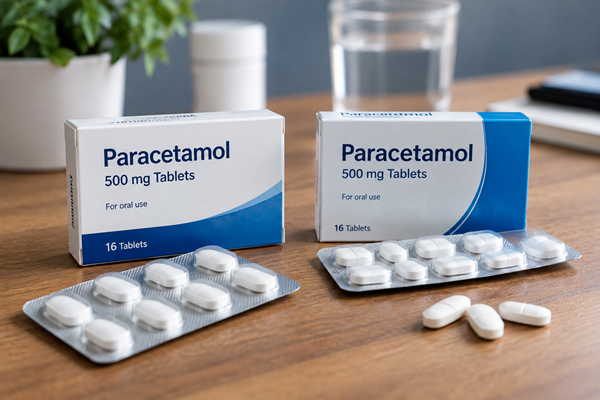
When you receive a medicine from a pharmacy, the name on the box may not always be the name you recognise.
You may have previously taken a branded medicine, only to receive a box with a different name, different packaging and even a different-looking tablet. It can be easy to wonder whether you have been given the wrong medicine or whether the new version will work in the same way.
In many cases, the difference comes down to brand name versus generic name.
Generic medicines contain the same active substance as their branded counterparts and, where they meet the requirements for a generic medicine, must demonstrate bioequivalence to the reference medicine. They are routinely used in the UK and are often less expensive than branded products.
So what actually changes between the two, and should you be concerned if your medicine looks different?
What is a brand-name medicine?
A brand-name medicine is a medicine sold under a name chosen by the pharmaceutical company that developed or markets it.
For example, Viagra is a brand name, while sildenafil is the generic name of the active ingredient used in the medicine.
A new medicine is usually developed and marketed by a pharmaceutical company under a specific brand. Patent protection can give the company a period of exclusivity before other manufacturers can produce generic versions.
Once other manufacturers are able to market a generic version, the same active ingredient can be sold under its generic name or another brand name.
This is why you may see several products containing the same active ingredient but made by different companies.
What is a generic medicine?
A generic medicine is a version of an existing medicine that contains the same active substance as the reference medicine.
For a medicine to qualify as a generic medicine under the UK regulatory framework, it must meet specific requirements, including having the same active substance and pharmaceutical form as the reference medicine and demonstrating bioequivalence.
Bioequivalence means that the generic medicine produces comparable levels of the active substance in the body to the reference medicine.
This is important because it is not enough for two tablets simply to contain the same ingredient. The medicine also needs to meet the relevant regulatory requirements before it can be authorised.
The Medicines and Healthcare products Regulatory Agency (MHRA) is responsible for regulating medicines in the UK.
Are generic medicines as effective as brand-name medicines?
For approved generic medicines, the active substance is the same and the product must meet the relevant quality, safety and bioequivalence requirements.
This means that a generic medicine is not simply a cheaper imitation. It has to satisfy regulatory requirements before it can be authorised.
The NHS explains that generic medicines are used more widely because they provide the same therapeutic effect as the branded medicine while generally costing less.
There can be differences in the way the product looks, however. These do not necessarily mean that the medicine works differently.
Why does a generic medicine look different?
This is one of the most common reasons people become concerned after receiving a generic medicine.
The tablet might:
- Be a different colour
- Have a different shape
- Be a different size
- Have different markings
- Come in different packaging
- Taste different
- Have a different coating
These differences can occur because generic manufacturers can use different inactive ingredients, tablet coatings, colours or manufacturing processes.
The active ingredient is the part of the medicine responsible for producing its therapeutic effect. Other ingredients can help form the tablet, preserve it, give it a particular appearance or affect characteristics such as taste.
Therefore, a different-looking tablet does not automatically mean that you have been given a different treatment.
If you have an allergy or intolerance to a particular inactive ingredient, however, it is important to tell your pharmacist or doctor. Different manufacturers can use different excipients, and this can be relevant for some patients.
Generic name vs brand name: What is the difference?
The simplest way to understand the difference is to separate the active ingredient from the product name.
| Generic name | Brand name |
| Usually refers to the active ingredient | Name given to a particular product |
| Can be used by different manufacturers | Usually associated with a particular manufacturer |
| Often appears on medicine packaging | Used to market and identify the product |
| Can have several brands containing the same ingredient | May contain the same active ingredient as other products |
For example, sildenafil is the generic name, while Viagra is a brand name used for a sildenafil medicine.
The same principle applies to many other medicines.
This is why a medicine may have a familiar brand name in one situation and be supplied under its generic name in another.
Why are generic medicines usually cheaper?
The price difference can be substantial, but it does not mean that a generic medicine is made to a lower standard.
A company developing a completely new medicine has to invest heavily in research, development and clinical studies before the product can be brought to market.
A generic medicine is based on an existing reference medicine. Its authorisation can therefore follow a different regulatory route, with the manufacturer demonstrating that the generic meets the necessary requirements, including bioequivalence, rather than repeating the entire development programme for the original medicine.
There are also usually several manufacturers able to produce a generic medicine once market exclusivity has ended. Competition between manufacturers can contribute to lower prices.
The lower price therefore does not mean that the medicine contains less active ingredient or has been made to a lower safety standard.
Does a generic medicine contain exactly the same ingredients?
Not necessarily.
This is an important distinction.
A generic medicine contains the same active substance as the reference medicine, but it does not have to contain exactly the same inactive ingredients.
Inactive ingredients, sometimes called excipients, can include substances used to give a tablet its shape, stability, colour or coating.
This is why two medicines containing the same active ingredient can look or taste different.
For most people, these differences do not affect the way the active medicine works. However, particular excipients can matter if you have a known allergy, intolerance or other reason to avoid them.
If you have previously reacted to a medicine, tell your pharmacist or prescriber before switching to another manufacturer’s version.
Can you be given a generic medicine instead of a brand?
In many circumstances, yes.
A prescription may be written using the generic name of the medicine, allowing a pharmacy to dispense an appropriate authorised version.
This is common within the NHS because generic prescribing can provide a cost-effective way of supplying medicines without compromising the therapeutic effect expected from an approved generic product.
However, there are circumstances where a particular product or brand may be important.
For some medicines, prescribers may use the brand name because differences between products can be clinically relevant. This can include certain biological medicines, modified-release preparations and medicines where maintaining a consistent product is particularly important.
Therefore, a general rule that every medicine should always be prescribed generically would be too simplistic.
Why might your medicine change from one manufacturer to another?
You may receive the same medicine from different manufacturers at different times.
This can happen because pharmacies obtain medicines from suppliers and availability can change. A pharmacy may therefore dispense a different manufacturer’s generic version while providing the same active medicine.
The packaging and tablet may look unfamiliar even though the active ingredient and strength remain the same.
If you are unsure whether the new product is the same medicine, check the active ingredient and strength on the packaging. If you still have concerns, ask your pharmacist before taking it.
Do not assume that a different appearance means that the medicine is incorrect.
What if the dose looks different?
A change in appearance does not necessarily mean a change in dose, but the strength of a medicine does matter.
For example, the same active ingredient may be available in several strengths. A 5 mg tablet and a 10 mg tablet may contain the same active ingredient but are not interchangeable simply because they contain the same substance.
Always check the strength and directions supplied with your medicine.
If you are uncertain about how much to take, speak to a pharmacist or prescriber rather than changing the dose yourself.
We also explain why it is important to follow dosage instructions, including why taking more or less than the recommended amount can affect how a medicine works.
Are generic medicines safe?
Authorised medicines in the UK are subject to regulatory requirements covering areas such as quality, safety and effectiveness.
A generic medicine must demonstrate that it meets the requirements for its particular authorisation. For conventional generic medicines, bioequivalence to the reference medicine is a key part of this process.
Once a medicine is in use, its safety continues to be monitored. Patients and healthcare professionals can report suspected side effects through the UK’s Yellow Card scheme.
This means that a generic medicine should not be viewed as an untested version of a branded medicine.
What about side effects?
Generic and branded medicines containing the same active ingredient can have the same expected therapeutic effects and many of the same potential side effects.
However, differences in inactive ingredients can mean that an individual may react differently to a particular formulation.
If you develop a new or unusual reaction after changing products, speak to a pharmacist or doctor. Do not assume that you have to continue taking a medicine that is causing a concerning reaction simply because it is a generic version.
If you have experienced problems with medicines before, make sure your healthcare professional knows about them.
What are Biosimilars?
Biosimilars are sometimes confused with generic medicines, but they are not the same thing.
A generic medicine is generally used for conventional chemically synthesised medicines and contains the same active substance as its reference product.
Biological medicines are more complex and are made from or derived from biological sources. Because of this complexity, it is not possible to produce a biological medicine in exactly the same way as a conventional generic tablet.
A biosimilar medicine is therefore a biological medicine that has been shown to have no clinically meaningful differences from its reference biological medicine in terms of quality, safety and efficacy.
Biosimilars have their own regulatory and prescribing considerations, so they should not simply be described as generic versions of biological medicines.
Does the brand name make a medicine better?
A familiar brand name does not automatically mean that a medicine will work better.
For conventional medicines, an authorised generic contains the same active substance as its reference medicine and must meet the relevant requirements for quality and bioequivalence.
There can still be legitimate reasons why a particular branded product is selected for an individual patient. These can include the formulation, release characteristics, inactive ingredients or the need to maintain consistency with a particular product.
The important factor is therefore not simply whether a medicine has a recognisable brand name. It is whether the specific medicine is appropriate for the person taking it.
Should you be worried if your pharmacy gives you a generic medicine?
Usually, there is no reason to be concerned simply because the packaging or manufacturer is different.
Before taking the medicine, check:
- The name of the active ingredient
- The strength
- The dosage instructions
- The expiry date
- Any specific instructions supplied with the medicine
Our guide on how to read a medication label without confusion explains where to find important information on medicine packaging, including the medicine name and strength.
If these details are different from what you were expecting, ask the pharmacist to explain the change.
This is particularly important if you take several medicines. Keeping an up-to-date list can make it easier to identify your treatment and reduce the risk of confusion.
What should you do if you prefer the brand you normally take?
If you have been taking a particular branded medicine and have concerns about changing to a generic version, speak to your pharmacist or prescriber.
Explain why you are concerned, particularly if you have experienced side effects, have an allergy or have previously had problems with a particular formulation.
Do not change between medicines, alter the dose or stop treatment without appropriate advice.
A healthcare professional can check the products involved and determine whether a particular brand or formulation is important in your circumstances.
What about supplements and other products?
When comparing medicines, it is also important to remember that a generic or branded medicine is only one part of the medication picture.
Vitamins, herbal remedies and other supplements can also affect how some medicines work.
If you take supplements alongside prescription or over-the-counter medicines, our guide to the hidden risks of mixing supplements with prescription medication explains why these products should be included when discussing your medicines with a healthcare professional.
Generic medicines and online pharmacies
The same principles apply when obtaining medicines through an online pharmacy.
The important issue is not simply whether a medicine is branded or generic. You should make sure that the medicine comes from a legitimate, regulated source and that it is appropriate for you.
The NHS advises people to check that an online pharmacy is registered with the General Pharmaceutical Council (GPhC). It also warns that medicines from unregistered websites can be fake, out of date, diluted or unsuitable.
When using an online pharmacy, provide accurate information about your existing medicines, allergies and relevant health conditions. This allows the appropriate checks to be made before a medicine is supplied where a clinical assessment is required.
Generic vs brand-name medicines: The key points
The difference between a generic and brand-name medicine is often much less complicated than it first appears.
- A brand name is the name used to market a particular medicine by a pharmaceutical company.
- A generic name normally identifies the active ingredient.
An authorised generic medicine contains the same active substance as its reference medicine and must meet the relevant UK requirements, including demonstrating bioequivalence for conventional generic medicines.
Generic medicines can look different because manufacturers may use different inactive ingredients, colours, coatings, packaging and tablet designs.
They are often cheaper because the manufacturer does not have to repeat the entire development process required for a new medicine.
There are exceptions where a particular brand or formulation may be important, so medicines should not be switched or changed without appropriate advice.
If your medicine looks different from the one you normally receive, check the active ingredient and strength. If you remain unsure, ask your pharmacist before taking it.
A different name or appearance does not automatically mean that you have been given a different treatment.

Comments are closed