


Subtotal €0.00

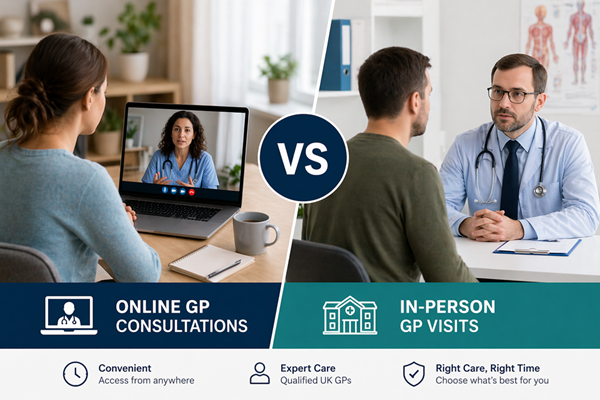
Access to healthcare in the UK has changed significantly, with online GP services now sitting alongside traditional face-to-face appointments. Both have a clear role, but they are not interchangeable. Choosing the right one can save time, speed up treatment, and ensure safer clinical decisions.
When an online GP consultation is appropriate
Online GP appointments work best when symptoms can be assessed through conversation, photos, or medical history without a physical examination.
They are commonly used for:
- Minor illnesses such as coughs, sore throats, or urinary symptoms
- Skin conditions where images can support diagnosis
- Repeat prescriptions or medication reviews
- On-going conditions that are already diagnosed and stable
- Mild mental health concerns such as anxiety or stress
- General medical advice when symptoms are unclear but not severe
They are particularly useful when access to a physical surgery is difficult, or when a quick clinical opinion is needed. Many patients also find online consultations more convenient for follow-ups, as they reduce travel and waiting time.
When an in-person GP visit is necessary
Some conditions require a physical examination, diagnostic tests, or immediate clinical assessment. In these cases, an in-person appointment is the safer option.
You should choose face-to-face care for:
- Chest pain, breathing difficulties, or signs of a serious infection
- Abdominal pain that is severe or worsening
- Symptoms requiring examination, such as lumps or swelling
- Children who appear very unwell or have persistent high fever
- Situations where blood tests, scans, or physical procedures are likely
- New or unexplained neurological symptoms such as fainting or weakness
In-person care allows a GP to carry out examinations and escalate treatment immediately if required.
How to decide quickly
A practical approach is to consider the level of assessment required:
- If the condition can be explained clearly and does not need physical examination, an online GP is usually suitable
- If symptoms are severe, worsening, or unclear in cause, an in-person appointment is safer
- If diagnostic tests are likely, face-to-face care is required
When in doubt, it is better to start with an in-person assessment or use NHS urgent advice services.
What happens after an online GP consultation
One of the main advantages of online GP services is the ability to act quickly on treatment plans. If medication is prescribed, it can often be sent directly to a nominated pharmacy or an online pharmacy service for delivery.
This means treatment can begin without delay, particularly for common conditions that do not require further testing.
Final takeaway
Online GP consultations are best suited for straightforward, non-urgent conditions and follow-up care. In-person visits remain essential for anything requiring physical examination, urgent assessment, or diagnostic testing.
Choosing correctly ensures faster treatment, safer outcomes, and more efficient use of healthcare services.

Comments are closed