


Subtotal €0.00

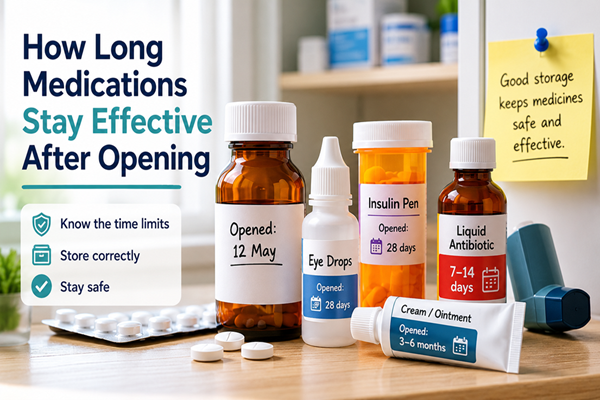
Many people assume medicines stay effective until the expiry date printed on the box. In reality, opening a medication can shorten its lifespan. Air, heat, moisture and bacteria can all affect how well medicines work after opening.
For some products, this change happens quickly. Eye drops, liquid antibiotics and insulin are common examples. Using medicines past their recommended period after opening can reduce effectiveness and, in some cases, increase health risks.
This guide explains how long common medications usually last after opening, how to store them correctly and when to throw them away.
Why Medicines Change After Opening
Once a medicine is opened, it becomes exposed to:
- Air
- Moisture
- Heat
- Light
- Bacteria
These factors can break down active ingredients or contaminate the product. Liquid medicines and sterile products are usually affected faster than tablets or capsules.
The World Health Organization highlights that poor medicine storage is common worldwide and can reduce medicine quality and safety. Research also found that around 77% of households store medicines at home, increasing the risk of using medicines incorrectly or beyond safe limits.
How Long Common Medicines Last After Opening
Tablets and Capsules
Most tablets and capsules stay effective until their printed expiry date if stored correctly.
However, they should remain:
- In their original packaging
- In a cool, dry place
- Away from sunlight and humidity
Bathrooms are often a poor storage location because heat and moisture can damage medicines over time.
If tablets become:
- Soft
- Crumbly
- Discoloured
- Sticky
- Unusual in smell
they should not be used.
Eye Drops
Eye drops usually expire quickly after opening because bacteria can enter the bottle.
Most eye drops should be discarded:
- 28 days after opening
Some preservative-free eye drops may need discarding even sooner.
Using old eye drops can increase the risk of eye infections.
Liquid Antibiotics
Liquid antibiotics mixed with water often have a short lifespan.
Most remain effective for:
- 7 to 14 days after preparation
Some require refrigeration while others do not. Always follow the pharmacy label instructions.
Expired liquid antibiotics may not fully treat an infection.
Insulin
Insulin products normally stay usable for:
- Around 28 days after opening
Storage rules vary between brands. Some insulin pens can be kept at room temperature once in use, while others need refrigeration.
Heat exposure can make insulin less effective even before the expiry date.
Creams and Ointments
Creams and ointments usually last:
- 3 to 6 months after opening
Products in jars may become contaminated faster because fingers touch the contents directly.
Stop using creams if they:
- Separate
- Change colour
- Develop an unusual smell
Inhalers
Most inhalers remain effective until the printed expiry date.
However, inhalers should be replaced if:
- The counter reaches zero
- The spray weakens
- The inhaler becomes damaged
Some inhalers also have a discard date after opening the foil packaging.
Medicines That Need Refrigeration
Some medicines must stay refrigerated to remain effective.
These can include:
- Certain eye drops
- Insulin
- Liquid antibiotics
- Biologic medicines
Incorrect storage temperatures can reduce potency before the expiry date.
Simple Medicine Storage Tips
To keep medicines effective for as long as possible:
- Store medicines in a cool, dry cupboard
- Keep products in original packaging
- Avoid storing medicines in bathrooms
- Keep lids tightly closed
- Follow refrigeration instructions carefully
- Keep medicines out of reach of children
- Write the opening date on the package
Good storage can help medicines remain stable and safe for longer.
When Medicines Should Be Thrown Away
Do not use medicines if:
- The expiry date has passed
- The recommended time after opening has passed
- The medicine looks or smells unusual
- Storage instructions were not followed
- Packaging is damaged
If unsure, speak with a pharmacist before using the medicine.
Final Thoughts
Opening a medicine can shorten how long it stays safe and effective. While tablets may last for months, products such as eye drops, insulin and liquid antibiotics often have much shorter time limits after opening.
Checking storage instructions and discard dates helps protect both safety and treatment effectiveness.
If there is any doubt about whether a medicine is still suitable to use, it is always safest to ask a pharmacist for advice.

Comments are closed