


Subtotal €0.00

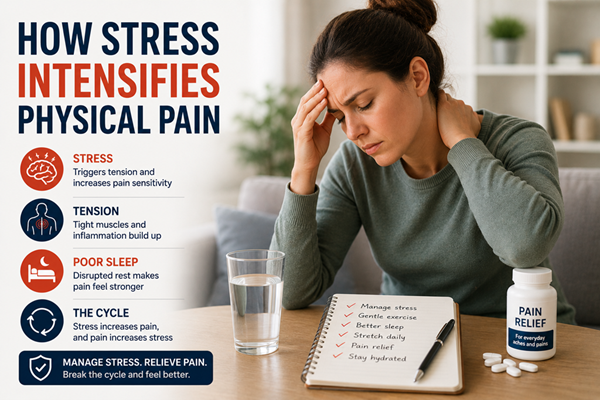
Stress affects far more than mood. It can increase muscle tension, raise inflammation levels, disrupt sleep, and make existing pain feel stronger. For many people, stress and pain become closely linked, creating a cycle that is difficult to break.
Research continues to show a strong connection between emotional stress and physical discomfort. According to NHS guidance, stress can trigger headaches, muscle pain, chest discomfort, and stomach problems.
For people already living with back pain, arthritis, migraines, joint pain, or nerve pain, stress can make symptoms harder to manage.
Why Stress Makes Pain Worse
When the body is under stress, it releases hormones such as cortisol and adrenaline. These hormones are useful during short periods of pressure, but on-going stress keeps the body in a constant state of tension.
This can lead to:
- Tight muscles and stiffness
- Increased sensitivity to pain
- Poor sleep quality
- Fatigue
- Higher inflammation levels
- Slower recovery from injuries
Over time, the nervous system becomes more reactive. This means pain signals can feel stronger than usual.
A recent review involving more than 2,600 participants found a clear link between stress system dysfunction and chronic pain conditions.
Common Types of Stress-Related Pain
Stress can affect almost every area of the body. Some of the most common symptoms include:
Headaches and Migraines
Stress is one of the leading causes of tension headaches. Tight muscles around the neck and scalp can trigger on-going discomfort.
Back and Neck Pain
Stress often causes muscles to tighten without notice. This can place extra strain on the back, shoulders, and neck.
Joint and Muscle Pain
People experiencing chronic stress may notice more aches, stiffness, and soreness throughout the body.
Stomach Pain
The digestive system reacts strongly to stress. This can lead to cramps, bloating, nausea, and discomfort.
Nerve Pain
Stress can increase nerve sensitivity, making burning, tingling, or shooting pain feel more intense.
Chronic Pain and Stress Often Work Together
Pain itself can also increase stress levels. Poor sleep, reduced movement, and daily discomfort can affect mental wellbeing.
This creates a cycle:
- Stress increases pain
- Pain increases stress
- The body struggles to recover
Breaking this cycle usually requires both stress management and proper pain relief.
According to NHS England data published in 2026, 26% of adults in England reported chronic pain, with 13% experiencing high-impact chronic pain.
Signs That Stress May Be Affecting Your Body
Many people do not immediately connect stress with physical symptoms. Signs can include:
- Frequent headaches
- Tight shoulders or jaw tension
- On-going fatigue
- Difficulty sleeping
- Muscle aches
- Digestive discomfort
- Increased pain flare-ups during stressful periods
If symptoms worsen during busy, emotional, or demanding periods, stress may be contributing to the problem.
Simple Ways to Reduce Stress-Related Pain
Small lifestyle changes can help reduce pressure on the nervous system and improve recovery.
Helpful approaches include:
- Regular walking or gentle exercise
- Stretching and mobility work
- Better sleep habits
- Limiting caffeine and alcohol
- Breathing exercises
- Staying hydrated
- Taking regular breaks from screens and work
However, many people also need reliable pain relief to stay comfortable and active.
How Pain Relief Medication Can Help
Effective pain relief can reduce discomfort, improve mobility, and make everyday tasks easier while managing stress levels.
We offer a wide range of pain relief medication designed to help manage common conditions such as:
- Headaches
- Muscle pain
- Joint pain
- Back pain
- Migraine symptoms
- Inflammation-related discomfort
Access to trusted online pharmacy services also makes it easier for people to find suitable support without unnecessary delays.
For people dealing with stress-related pain flare-ups, the right medication may help improve comfort, sleep quality, and day-to-day function.
When to Seek Medical Advice
Occasional stress-related pain is common, but on-going symptoms should not be ignored.
Seek professional advice if pain:
- Lasts for several weeks
- Becomes more severe
- Affects sleep or daily activities
- Causes numbness or weakness
- Comes with chest pain or breathing difficulties
A healthcare professional can help identify the cause and recommend suitable treatment options.
Final Thoughts
Stress and physical pain are closely connected. On-going stress can increase muscle tension, inflammation, and pain sensitivity, making existing conditions feel worse.
Understanding this connection is important for long-term wellbeing. Combining stress management with effective pain relief can help reduce discomfort and improve quality of life.
Reliable pain relief medication from apothekedirekte.com can provide valuable support for people managing everyday aches, chronic pain, and stress-related flare-ups.

Comments are closed