


Subtotal €0.00

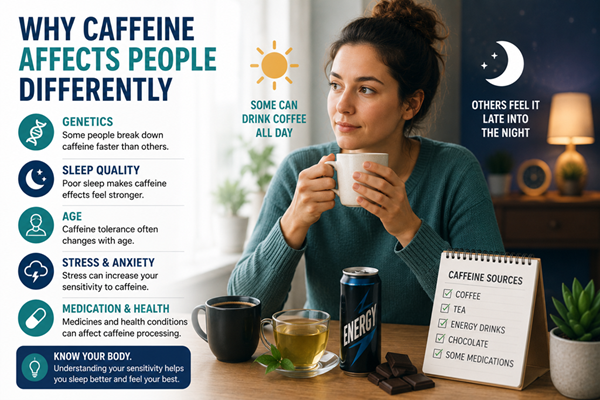
For some people, one coffee in the afternoon causes a sleepless night. Others can drink an espresso after dinner and fall asleep with no problem.
The reason is simple: caffeine affects every person differently. Genetics, sleep habits, stress levels, medication, age, and overall health all change how the body reacts to caffeine.
Understanding caffeine sensitivity can help people improve their sleep, reduce anxiety, and make better decisions about daily caffeine intake.
What Is Caffeine?
Caffeine is a natural stimulant found in coffee, tea, energy drinks, chocolate, and some medications. It works by blocking adenosine, a chemical in the brain that helps the body feel tired.
This increases alertness and energy levels, which is why millions of people rely on caffeine every day.
According to the European Food Safety Authority, up to 400mg of caffeine per day is considered safe for most healthy adults.
That equals roughly:
- 4 cups of brewed coffee
- 5 cans of energy drink
- 8 cups of tea
However, “safe” does not mean every person reacts the same way.
Why Some People Are More Sensitive to Caffeine
Genetics Play a Major Role
Genes strongly influence how quickly the body breaks down caffeine.
Some people have a fast caffeine metabolism. Their liver removes caffeine quickly, so its effects wear off sooner.
Others process caffeine slowly. In these people, caffeine stays in the bloodstream for much longer, increasing the chance of:
- Difficulty sleeping
- Anxiety
- Shaking or jitters
- Rapid heartbeat
- Restlessness
Recent research involving more than 400,000 participants from the UK Biobank found that genetics can influence both caffeine metabolism and sleep behaviours.
Sleep Quality Matters
People who already struggle with sleep often feel caffeine effects more strongly.
Caffeine blocks the brain’s natural sleep signals. If sleep quality is already poor, even small amounts of caffeine can make tiredness, irritability, and concentration problems worse.
Research has shown that drinking four or more caffeinated beverages daily can reduce total sleep time.
Age Changes Caffeine Tolerance
As people get older, the body usually breaks down caffeine more slowly.
This means a coffee consumed in the afternoon may still affect sleep late at night.
Younger adults may also react differently because of changes in brain chemistry and sleep patterns.
Stress and Anxiety Increase Sensitivity
Stress hormones and caffeine both stimulate the nervous system.
When combined, they can increase symptoms such as:
- Nervousness
- Racing thoughts
- Sweating
- Panic feelings
- Poor sleep
People with anxiety disorders are often more sensitive to caffeine than others.
How Long Does Caffeine Stay in the Body?
Many people underestimate how long caffeine lasts.
Experts estimate caffeine has a half-life of around five to seven hours.
That means if someone drinks coffee at 4pm, half the caffeine may still be active close to bedtime.
Some newer studies suggest high caffeine intake can affect sleep even 12 hours later.
Signs You May Be Sensitive to Caffeine
Common symptoms include:
- Trouble falling asleep
- Light or interrupted sleep
- Feeling anxious after coffee
- Rapid heartbeat
- Headaches
- Digestive discomfort
- Feeling shaky after energy drinks
- Fatigue after caffeine wears off
People experiencing these symptoms regularly may benefit from reducing caffeine intake, especially later in the day.
How to Reduce the Effects of Caffeine
Simple changes can make a noticeable difference.
Avoid Caffeine Late in the Day
Many sleep experts recommend avoiding caffeine at least 6 hours before bedtime.
For sensitive individuals, stopping earlier may help even more.
Reduce Intake Gradually
Stopping caffeine suddenly can cause withdrawal symptoms such as headaches and tiredness.
Reducing intake slowly is usually easier on the body.
Check Hidden Sources
Caffeine is not only found in coffee.
It is also common in:
- Energy drinks
- Tea
- Chocolate
- Cola drinks
- Pre-workout supplements
- Some pain relief medicines
When Sleep Problems Continue
Reducing caffeine helps many people, but not everyone.
Persistent sleep problems may require additional support, especially if poor sleep is affecting daily life, work performance, or mental wellbeing.
Sleep medication available from apotheke direkte may help adults struggling with short-term sleep difficulties. An online pharmacy can provide access to suitable treatment options alongside professional guidance, helping people improve sleep quality safely and conveniently.
Medication should always be used responsibly and alongside healthy sleep habits such as:
- Keeping a regular bedtime
- Reducing screen time before bed
- Limiting caffeine intake
- Creating a calm sleep environment
Final Thoughts
Caffeine affects people differently because everybody processes stimulants in its own way.
Genetics, age, stress, sleep quality, and overall health all influence how caffeine impacts energy levels and sleep.
For some people, caffeine causes very few issues. For others, even a small amount can lead to poor sleep and anxiety.
Understanding personal caffeine sensitivity can help people make better choices, improve sleep quality, and protect long-term health. For those still struggling with sleep despite lifestyle changes, support and sleep treatment options from apothekedirekte.com may provide additional help.

Comments are closed