


Subtotal €0.00

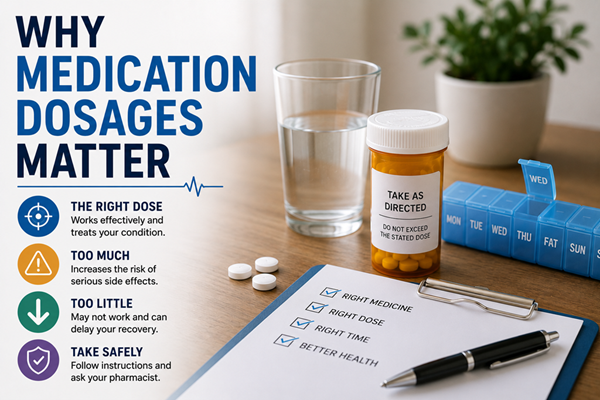
Medicines are designed to help people recover, manage symptoms and improve quality of life. However, even the best medication can become dangerous when the dosage is wrong.
A dosage is the exact amount of medicine a person should take at a specific time. Too little may not treat the condition properly. Too much can increase the risk of serious side effects or complications.
Understanding why medication dosages matter can help patients stay safe and get the best results from their treatment.
What Does Medication Dosage Mean?
Medication dosage refers to:
- How much medicine should be taken
- How often it should be taken
- How long it should be used
Doctors and pharmacists calculate dosages carefully. They consider factors such as:
- Age
- Weight
- Medical history
- Existing health conditions
- Other medications being taken
This is why one person may need a different dose from someone else taking the same medicine.
Why Taking the Correct Dose Is Important
The correct dosage helps medicines work properly while reducing the risk of harm.
Too Little Medication
Taking less than prescribed may:
- Reduce the effectiveness of treatment
- Cause symptoms to continue
- Delay recovery
- Increase the chance of complications
For example, taking antibiotics incorrectly may allow infections to return or worsen.
Too Much Medication
Taking more than recommended can lead to:
- Severe side effects
- Organ damage
- Drug interactions
- Accidental overdose
Some medicines have a very small safety margin, meaning even a slightly higher dose can become dangerous.
Medication Errors Are More Common Than Many People Think
Medication mistakes remain a major healthcare issue in the UK.
Research published in BMJ Quality & Safety estimated that more than 237 million medication errors happen in England every year. These errors contribute to over 1,700 deaths annually and cost the NHS around £98 million each year.
The NHS also reports that incorrect dosages are among the most common medicine-related problems.
These mistakes can happen when:
- Prescriptions are written incorrectly
- Medicines are dispensed incorrectly
- Patients misunderstand instructions
- Different medicines interact with each other
Common Reasons People Take the Wrong Dose
Many dosage problems happen at home rather than in hospitals or pharmacies.
Common causes include:
Forgetting a Dose
Some people accidentally miss doses and later double up to compensate. This can increase the risk of side effects.
Misreading Instructions
Taking medication at the wrong time or in the wrong amount is more common than many people realise.
Using the Wrong Measuring Tool
Liquid medicines should always be measured using a proper medicine spoon or syringe. Kitchen teaspoons are not accurate.
Taking Old Medication
Using leftover medication from a previous illness can be risky because the dosage may no longer be suitable.
Mixing Medications Without Advice
Some over-the-counter medicines can interfere with prescription treatments and change how they work.
Why Dosages Differ Between Patients
There is no universal dosage for every person.
For example:
- Children usually need lower doses than adults
- Older adults may process medication more slowly
- People with kidney or liver problems may require adjusted doses
- Certain medicines need gradual dose increases or reductions
This is especially important for treatments such as:
- Blood pressure medication
- Diabetes medication
- Antidepressants
- ADHD medication
- Pain relief medication
How to Take Medication Safely
Patients can reduce risks by following a few simple steps.
Always Follow the Label
Never change the dosage unless advised by a healthcare professional.
Read the Patient Information Leaflet
The leaflet explains:
- Correct dosage
- Possible side effects
- Foods or medicines to avoid
Use Reminders
Phone alarms or pill organisers can help people remember doses correctly.
Speak to a Pharmacist
Pharmacists can explain:
- How to take medication safely
- What to do after a missed dose
- Possible interactions with other medicines
Report Side Effects Early
Unexpected symptoms should never be ignored.
The Role of Online Pharmacies
Trusted online pharmacies help patients access professional advice alongside their medication.
Ordering medicines online can also improve convenience for people managing long-term conditions or repeat prescriptions.
However, patients should only use regulated pharmacies that require proper prescriptions where necessary and provide access to qualified pharmacy professionals.
Final Thoughts
Correct medication dosages are essential for safe and effective treatment. Even small mistakes can affect how well a medicine works or increase the risk of harm.
Patients should always follow professional guidance, read instructions carefully and ask questions whenever something is unclear.
Safe medication use starts with understanding the importance of the right dose at the right time.

Comments are closed