


Subtotal €0.00

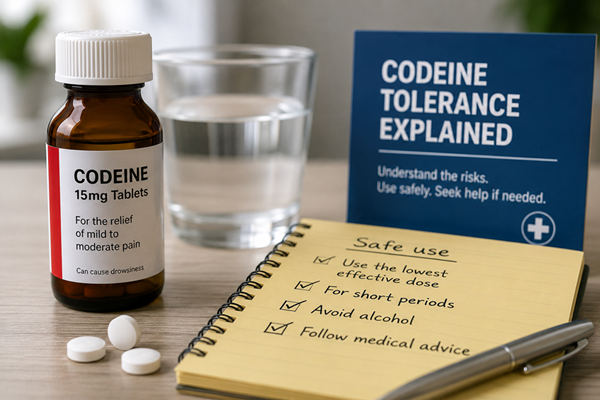
Codeine is one of the most commonly used opioid painkillers in the UK. It is found in medicines such as co-codamol, codeine phosphate and some cough medicines. While it can help with short-term pain relief, regular use can lead to tolerance and dependence.
Many people do not realise tolerance can develop within weeks. This often causes people to take higher doses to get the same effect, increasing the risk of addiction, overdose and serious side effects.
In 2024, the UK government tightened restrictions on codeine linctus because of rising concerns about misuse, dependence and overdose.
What Is Codeine Tolerance?
Codeine tolerance happens when the body becomes used to the medicine over time. After repeated use, the original dose may stop providing the same level of pain relief.
This means a person may feel the need to:
- Take codeine more often
- Increase the dose
- Use stronger opioid medicines
- Combine codeine with other painkillers
Tolerance is different from addiction, but the two are closely linked.
The NHS confirms that long-term use of codeine can cause the body to become used to it, meaning higher doses may be needed over time.
How Quickly Does Codeine Tolerance Develop?
Tolerance can develop surprisingly fast. For some people, changes begin within a few weeks of daily use.
Several factors affect how quickly this happens:
- Dose strength
- Frequency of use
- Length of treatment
- Age and metabolism
- Previous opioid use
- Alcohol or drug use
People taking high-strength co-codamol or codeine phosphate regularly are at greater risk.
Signs of Codeine Tolerance
Common signs include:
- Pain relief does not last as long
- Current dose feels weaker
- Need for larger doses
- Withdrawal symptoms between doses
- Cravings for codeine
- Using codeine for reasons other than pain
Some people also develop mood changes, poor concentration and sleep problems.
Codeine Tolerance vs Dependence
Tolerance and dependence are not the same thing.
Tolerance
The body adapts to codeine, reducing its effect.
Dependence
The body relies on codeine to function normally. Stopping suddenly may cause withdrawal symptoms.
Withdrawal symptoms can include:
- Sweating
- Anxiety
- Restlessness
- Muscle aches
- Nausea
- Diarrhoea
- Insomnia
The NHS warns that codeine can become addictive, especially with long-term use.
Why Increasing Codeine Doses Is Dangerous
Many people believe taking more codeine is harmless because lower-strength products are sold in pharmacies. This is not true.
Higher doses increase the risk of:
- Addiction
- Breathing problems
- Liver damage
- Kidney damage
- Overdose
This risk is even greater with co-codamol because it contains paracetamol. Too much paracetamol can cause severe liver failure.
In England, more than 138,000 adults received treatment for opiate problems between 2024 and 2025.
Research published in 2024 also found that around one in ten patients prescribed opioids develop dependence.
Can Codeine Tolerance Be Reversed?
In many cases, yes.
Tolerance often reduces after lowering the dose or stopping treatment completely. This process can take days, weeks or longer depending on how long codeine has been used.
Never stop high-dose or long-term opioid use suddenly without medical advice.
A healthcare professional may recommend:
- Gradual dose reduction
- Alternative pain relief
- Physiotherapy
- Anti-inflammatory medicines
- Support for withdrawal symptoms
How To Use Codeine Safely
To reduce the risk of tolerance and dependence:
- Use the lowest effective dose
- Only take codeine for short periods
- Avoid alcohol while taking codeine
- Never exceed the recommended dose
- Speak to a pharmacist or doctor if pain continues
People should also avoid combining multiple codeine-containing medicines accidentally.
When To Seek Medical Advice
Speak to a healthcare professional if:
- Codeine no longer controls pain
- Higher doses are needed
- Withdrawal symptoms appear
- Side effects become worse
- Codeine use lasts longer than a few weeks
Early support can prevent serious health complications.
Final Thoughts
Codeine can provide effective short-term pain relief, but regular use can quickly lead to tolerance. Once tolerance develops, increasing the dose can become dangerous and may lead to dependence or addiction.
Understanding the warning signs early is important. Safe use, short treatment periods and professional advice can help reduce the risks linked to long-term codeine use.
For guidance on pain relief medicines, speak to a pharmacist at ApothekeDirekte.

Comments are closed