Subtotal €0.00

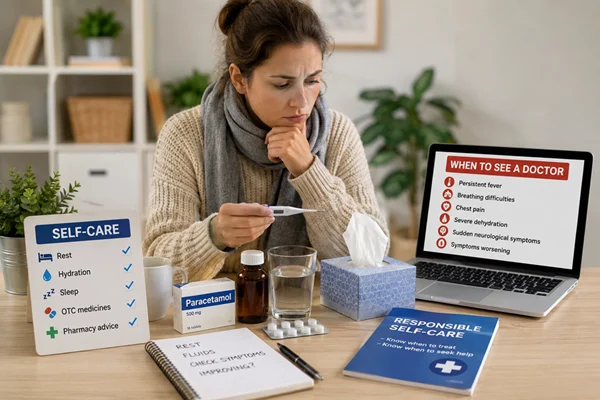
Self-care has become part of everyday life for many people across Europe.
Headaches, seasonal allergies, mild colds, digestive discomfort, muscle aches, and flu-like symptoms are often managed at home first using:
- Rest
- Hydration
- Sleep
- Over-the-counter medicines
- Pharmacy advice
In many situations, that approach is completely reasonable.
The difficulty is that modern health advice has also become increasingly noisy. Consumers are now balancing:
- Online symptom searches
- Social media advice
- Pharmacy guidance
- Self-care products
- Conflicting health information
At some point, uncertainty usually appears.
A fever lasts longer than expected. A migraine feels more severe than normal. Breathing becomes more difficult. Fatigue intensifies rather than improving. Symptoms begin overlapping in ways that feel unfamiliar.
That is often where the question changes from:
“How do I manage these symptoms at home?”
To:
“Should I now speak to a healthcare professional?”
As of May 2026, healthcare guidance across Europe continues supporting responsible self-care for many minor illnesses and short-term symptoms, while also emphasising the importance of recognising when symptoms may require professional medical assessment instead.
The goal is not to panic over every symptom.
The goal is to understand when home treatment is appropriate and when escalation may be a safer decision.
When home self-care is often reasonable
Many everyday symptoms improve naturally with time, rest, and supportive self-care measures.
This process commonly includes:
- Mild cold symptoms
- Seasonal allergies
- Short-term headaches
- Temporary digestive discomfort
- Mild muscle aches
- Minor sore throats
- Temporary fatigue during minor illness
In these situations, people often benefit from:
- Proper hydration
- Consistent sleep
- Avoiding unnecessary overexertion
- Monitoring symptoms
- Using OTC medicines responsibly
Importantly, symptom improvement is often gradual rather than immediate.
A cold, for example, may still involve congestion, tiredness, or coughing several days after symptoms first begin. Mild headaches may improve once hydration, sleep, or stress levels stabilise.
This is one reason many pharmacists continue encouraging consumers to monitor how symptoms develop over time rather than expecting instant recovery from common illnesses.
Self-care is not about ignoring symptoms.
It is about managing appropriate symptoms responsibly while remaining aware of changes that may suggest something more significant is developing.
The signs people should not ignore
Some symptoms deserve closer attention, particularly when they:
- Worsen unexpectedly
- Persist longer than anticipated
- Feel significantly different from previous illness experiences
- Interfere with breathing, hydration, or normal function
This symptom does not automatically mean something serious is happening.
However, some situations may require professional medical assessment rather than continued self-treatment alone.
Examples can include:
- Persistent or worsening fever
- Breathing difficulties
- Chest pain
- Severe dehydration
- Sudden neurological symptoms
- Confusion or unusual drowsiness
- Migraines becoming unusually severe or different from normal
- Symptoms continuing significantly longer than expected without improvement
Duration also matters.
A headache lasting a few hours may feel very different from headaches becoming persistent over several days alongside worsening fatigue or illness symptoms.
Similarly, cold symptoms that gradually improve are usually different from symptoms that intensify despite rest and self-care.
The important distinction is not fear.
The key is to recognise when symptoms exceed what feels typical or manageable.
Why antibiotics are still widely misunderstood
Antibiotics remain one of the most misunderstood parts of everyday self-care.
Antibiotics do not improve many common illnesses, including most colds and flu-like viral infections. Antibiotics are designed to treat bacterial infections rather than viral illnesses.
This creates confusion because symptoms such as:
- Sore throats
- Coughing
- Congestion
- Fatigue
- Fever
Can appear in both viral and bacterial illnesses.
As a result, many people assume antibiotics are automatically appropriate whenever symptoms feel severe or uncomfortable.
In reality, healthcare professionals often assess:
- Symptom duration
- Severity
- Infection pattern
- Medical history
- Risk factors
Before deciding whether antibiotics may be appropriate.
As of May 2026, healthcare systems across Europe will continue emphasising responsible antibiotic use because unnecessary antibiotic exposure contributes to antimicrobial resistance over time.
For consumers, the focus usually means avoiding the assumption that stronger medicine automatically equals better treatment.
Occasionally the safer and more appropriate approach involves symptom management, hydration, rest, and monitoring rather than immediate antibiotic use.
A realistic self-care escalation scenario
Consider someone developing flu-like symptoms during a stressful workweek.
Initially, the symptoms feel manageable. They use over-the-counter cold remedies, increase fluids slightly, and continue working from home while expecting the illness to pass naturally.
For the first few days, this approach may seem reasonable.
However, the situation gradually changes.
Fatigue worsens instead of improving. Fever becomes more persistent. Hydration drops because appetite decreases. Sleep becomes disrupted, and breathing feels more uncomfortable than during previous colds.
At this stage, the decision-making process changes.
The issue is no longer simply:
“How do I relieve symptoms?”
The issue becomes whether professional medical assessment may now be appropriate because the illness pattern no longer feels routine.
This is one reason pharmacy-focused healthcare platforms such as Apotheke Direkte increasingly operate within a broader self-care environment where responsible medicine use, symptom awareness, and knowing when to escalate all matter together rather than separately.
Why pharmacists remain important in modern self-care
Pharmacists continue playing an important role within everyday healthcare across Europe.
For many consumers, pharmacists are one of the most accessible healthcare professionals available for guidance involving:
- OTC medicine selection
- Dosage clarification
- Medicine interactions
- Symptom monitoring
- Self-care support
- Escalation awareness
This becomes especially important because many symptoms exist within grey areas rather than strict categories.
A mild headache after poor sleep may improve with hydration and rest. Persistent headaches combined with neurological symptoms may require medical review.
A sore throat may remain manageable at home. Difficulty breathing or worsening symptoms may require escalation.
The distinction often depends on:
- Severity
- Duration
- Progression
- Personal medical history
- Overall symptom pattern
This is why responsible self-care is not simply about buying medicines.
It is about understanding:
- When symptoms remain manageable
- When monitoring becomes important
- When professional support may become appropriate
Why balanced self-care matters more than panic
Modern healthcare conversations often swing between two extremes.
Some advice encourages people to ignore symptoms too casually. Other advice turns every symptom into a worst-case scenario.
Most everyday self-care decisions sit somewhere in the middle.
Many common illnesses improve safely with:
- Rest
- Hydration
- Symptom monitoring
- Responsible OTC medicine use
- Pharmacy guidance
At the same time, some symptoms deserve escalation when they become:
- Unusually severe
- Persistent
- Progressive
- Difficult to manage
- Noticeably different from normal
The goal is not fear.
The goal is awareness. Responsible self-care works best when people feel confident managing everyday symptoms appropriately while also recognising when professional medical assessment may become the safer next step.

Comments are closed